Car Audio Installation Across North Georgia
Most car audio problems start with rushed installs. Wiring tucked where it shouldn't be, amps mounted where they'll vibrate loose, enclosures that don't fit the vehicle. I do car audio work the way it's supposed to be done: thought-through routing, proper fuse sizing, and enclosures sized for the sub instead of the other way around.
Based in Canton, GA, serving North Georgia and the greater Atlanta metro. Head-unit swaps, full system builds, and rescues of installs that went wrong somewhere else are all welcome.
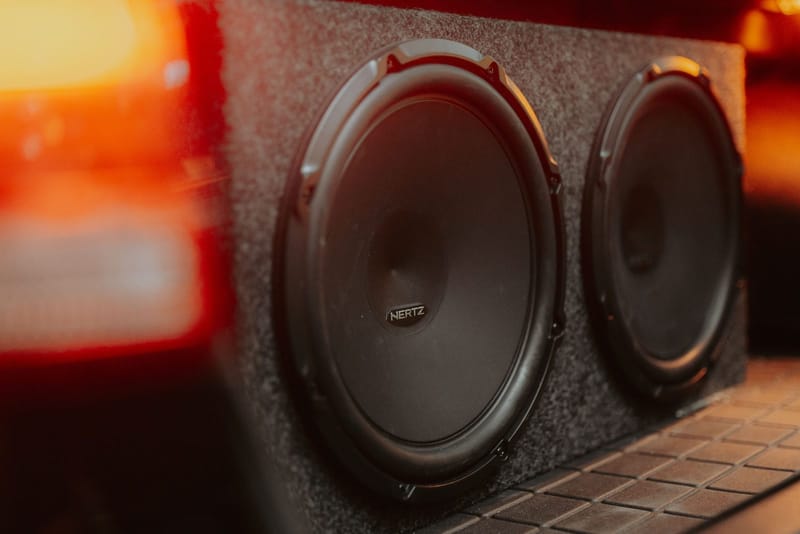
From CarPlay swaps to full builds.
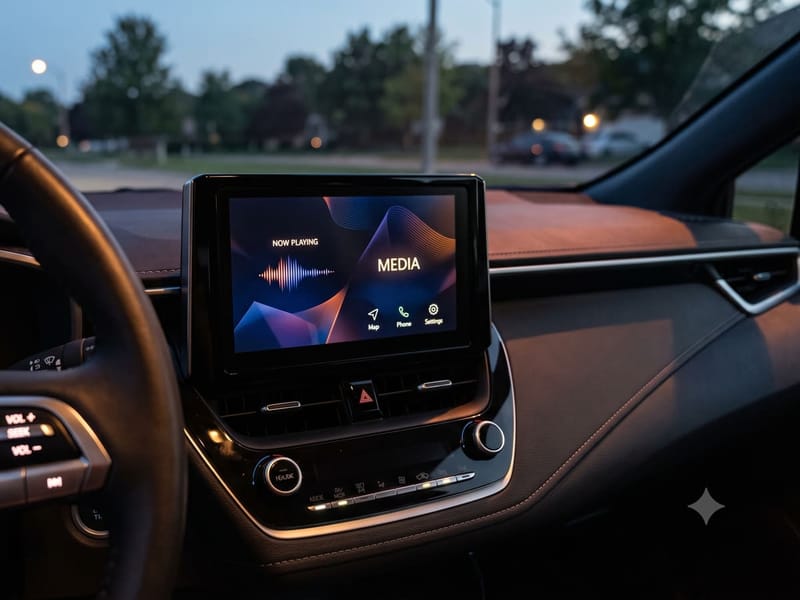
Head units & CarPlay
- Wired and wireless CarPlay / Android Auto
- Steering-wheel controls and chimes retained
- Backup cameras kept or added
- Factory integration modules, no cut harnesses
Speakers & amplifiers
- Component and coaxial speaker upgrades
- Four-channel and mono amplifiers
- Power matched by RMS, not sticker peak
- Gains set with test equipment, not by ear
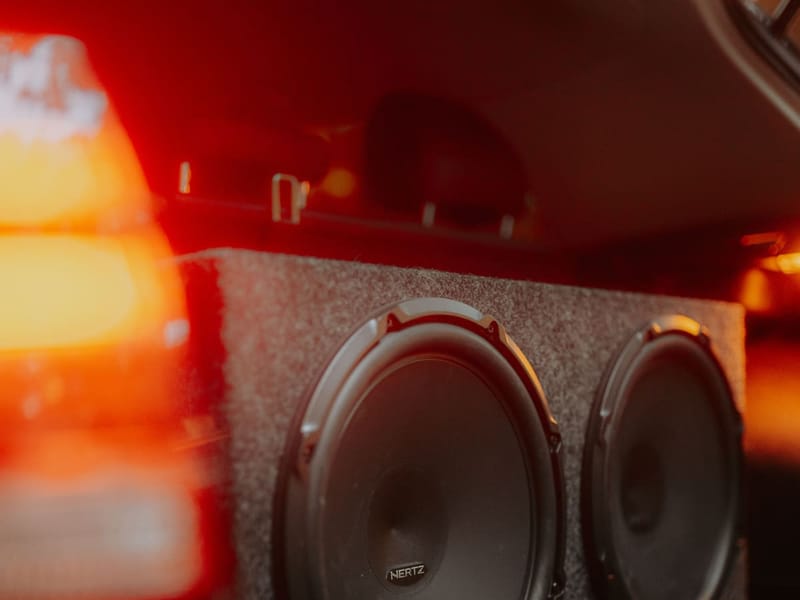
Subwoofers & enclosures
- Sealed, ported, and fiberglass enclosures
- Boxes designed to the driver's actual specs
- Prefab used when it genuinely fits the goal
- Big-3 wiring upgrades for demanding builds
Sound deadening
- Butyl mat plus closed-cell foam, doors first
- Panel rattles and road noise killed at the source
- Tighter bass and clearer vocals from gear you own
- Name-brand materials that stay stuck in Georgia heat
12V accessories & rescues
- LED and accent lighting, dash cams, switch panels
- Alternator whine and ground-loop diagnosis
- Blown fuses, cutouts, and no-sound-after-install fixes
- Rat's-nest wiring cleaned up and properly fused
Keep your steering wheel buttons, your camera, and your warranty.
The most-asked question in car audio: what do I lose? With the right integration module the answer is nothing. Steering-wheel controls, backup camera, and chimes all carry over, the factory harness never gets cut, and the whole install is reversible.
As for the warranty: federal law (the Magnuson-Moss Warranty Act) means a dealer can't void it just because aftermarket gear is installed. They'd have to prove the specific part caused the specific failure, and a properly fused, cleanly integrated install gives them nothing to point at.
What's behind the panel matters more than the gear.
Alternator whine, blown fuses, subs that die in summer: nearly all of it traces back to installation shortcuts, not equipment. The invisible work is the difference between a system that lasts and one that fails a month after the receipt fades.
- Fused at the battery. Every power run protected within inches of the terminal. That's the difference between a blown fuse and a fire.
- Grounds to bare metal. Sanded, bolted, and sealed. Bad grounds cause most whine and voltage-drop gremlins.
- Loomed and routed. Power and signal on opposite sides of the car, protected through every hole in metal.
- Tuned with instruments. Clipping, not clean power, is what kills speakers. Gains get set with test tones.
From first call to finished work.
Listen first
What do you drive, what do you listen to, what bugs you about the current sound, and what's the budget. A conversation, not a pitch.
Plan the system
A written gear plan matched to your vehicle, with good-better-best options and honest advice on what integrates with your factory electronics.
Clean install
Harness adapters instead of cut wires, fused power, grounds to bare metal, and panels back on without broken clips.
Tune & demo
Gains and crossovers set with instruments, DSP dialed in where equipped, then a full walkthrough of the system before handoff.
Frequently asked questions
Will an aftermarket stereo void my warranty?
No. The federal Magnuson-Moss Warranty Act prevents a dealer from voiding your warranty just because aftermarket equipment is installed. They would have to prove the specific part caused a specific failure, and a properly fused, cleanly integrated install gives them nothing to point at.
Can I keep my steering wheel controls and backup camera?
In most vehicles, yes. Integration modules like iDatalink Maestro, Axxess, and PAC translate between the car's computer and the new radio, keeping wheel buttons, camera, and chimes. I confirm compatibility for your exact year and model before quoting.
Can I add CarPlay or Android Auto without replacing everything?
Usually. A new receiver adds wired or wireless CarPlay and Android Auto while the rest of the system stays put. For 2010s vehicles it's the best value upgrade there is.
Can you work with gear I already bought?
Yes. I'll tell you honestly before the install whether the pieces are going to play well together.
Sealed or ported enclosure?
Sealed is tighter and more accurate, takes less space, and suits every genre, which makes it the usual daily-driver pick. Ported plays louder near its tuning frequency and suits bass-heavy music. Either way the box gets designed to your specific subwoofer's specs, not a generic cube.
How much amplifier power do I need?
Match by RMS ratings, not peak stickers. An amp delivering roughly 75-150 percent of the speaker's RMS rating is the sweet spot, because clean headroom prevents clipping, and clipped power is what actually blows speakers.
What about sound deadening?
Absolutely worth it on most vehicles, especially for bass response and road noise. Doors alone deliver most of the benefit. I use name-brand butyl and closed-cell foam rather than the cheap stuff that falls off in a year.
My last install has problems. Can you fix it?
Yes. Alternator whine is almost always a bad ground or power and signal cables run together; cutouts are usually loose crimps or unfused, undersized wiring. I diagnose the root cause, fix it properly, and clean up the wiring while I'm in there.
Based in Canton, GA, serving North Georgia and the greater Atlanta metro — Woodstock, Alpharetta, Marietta, Gainesville, Cartersville, and anywhere within about an hour.