Custom Websites & Software Development in North Georgia
Most small businesses don't need another SaaS subscription. They need the thing that actually does the job. I build marketing sites, internal tools, integrations, automations, and purpose-built apps, sized to the problem instead of the sales pitch.
This work is remote-friendly, so engagements aren't limited to North Georgia. If your team is in Atlanta, Nashville, or anywhere in between, the distance doesn't matter.
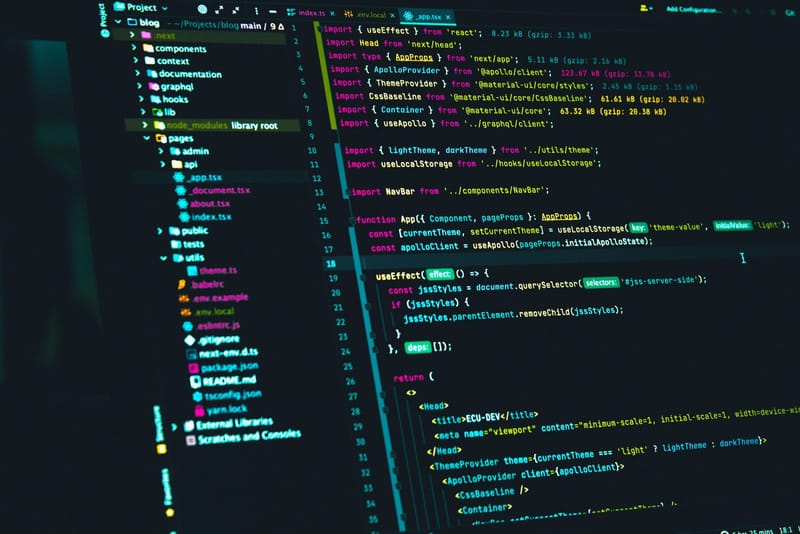
Built to fit your business, not the other way around.
Websites
- Marketing and service-business sites (like this one)
- Quote, booking, and lead-capture flows
- Local SEO fundamentals done properly
- Fast pages, and migrations off builders you've outgrown
Internal tools & dashboards
- Job and order trackers that replace the spreadsheet tangle
- One customer database the whole team can search
- Approval and onboarding workflows
- KPI dashboards pulling live numbers, not Monday copy-paste
Client portals
- "Where's my order" status pages that stop the calls
- Document upload and exchange, off of email
- Invoice and payment history views
- Branded onboarding that doesn't leak steps
Automations & integrations
- Lead to CRM to follow-up in one automatic flow
- Invoice generation and polite payment reminders
- Appointment reminder cadences that cut no-shows
- n8n workflows across Salesforce, HubSpot, M365, and QuickBooks
Practical AI
- First drafts of replies and proposals, human-approved
- Summaries and triage of inbound email and leads
- Data extracted from PDFs and invoices into your systems
- Assistants over your own documents, not the internet's
Support after launch
- Updates, backups, and monitoring
- A bucket of small-change hours when you need them
- Documentation a future developer can pick up
- Walk away anytime and keep everything. It's yours.
Your code, your accounts, your data. Delivered.
Here's a trap most owners find out about too late: under copyright default, the developer owns custom code unless the contract says otherwise. Plenty of businesses have paid in full for software they legally don't own, running in accounts they can't access.
I flip that. IP is assigned to you, the code lives in your repository, hosting runs in your accounts, and every credential is handed over at launch. If I disappeared tomorrow, any competent developer could pick up exactly where I left off.
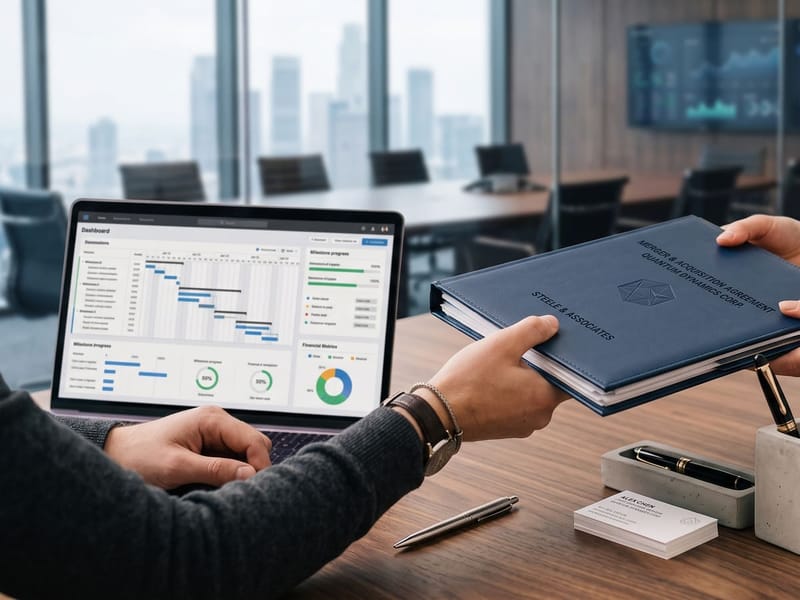
Sometimes the answer is Squarespace. I'll say so.
If a website builder or a twenty-dollar SaaS tool solves your problem, you'll hear it in the first call, because a vendor who knows you can't leave has less reason to do great work. Custom earns its cost when the manual version is already costing you real hours:
- The lead that goes cold. A Friday-night form fill gets an instant reply and lands in your CRM, instead of waiting for Monday.
- The invoice chase. Finishing a job sends the invoice and schedules the polite reminders. Nothing slips.
- The Monday report. A dashboard pulls live numbers from QuickBooks and the CRM, instead of two hours of copy-paste.
- The paperwork pile. Dropped PDFs get their fields extracted automatically, with anything uncertain flagged for a human.

From first call to finished work.
Discover
A free, plain-English conversation about the problem, your current tools, and what better looks like. If a cheap off-the-shelf tool fits, I'll say so here.
Propose
A short written proposal: exactly what gets built, what it costs, how long it takes, and what's not included. Fixed scope, fixed price.
Build in the open
Working previews on a staging link and regular updates. No weeks of silence followed by a big reveal.
Launch & support
Deployed to your accounts with credentials, code, and docs handed over. Then optional monthly support, or walk away with everything. Your call.
Frequently asked questions
How much does a website cost?
A straightforward small-business marketing site is a low-four-figure project. Booking, e-commerce, or integrations push it toward mid-four figures. Either way you get a fixed written price before any work starts, and the quote is the price.
How long does a project take?
A typical business website runs four to eight weeks. A single automation workflow can be days; a portal or dashboard is usually a few weeks. The most common delay is waiting on content and feedback, so I'll tell you upfront exactly what I need from you.
Do I really need a custom website, or is Squarespace/Wix fine?
Builders are genuinely right for testing an idea or a simple brochure presence. Custom earns its cost when you need real integrations, booking or quoting flows, or performance and SEO that matter. If a builder fits, I'll tell you, and sometimes I'll just set one up and hand it over.
Who owns the code when you're done?
You do, fully. IP is assigned to you in the contract, the code lives in your repository, and hosting runs in your accounts. No license-back clauses, no lock-in.
What happens after launch? Will you disappear?
You get all credentials, code, and documentation at launch regardless. From there, optional monthly support covers updates, backups, monitoring, and small changes. And because you own everything, you can walk away anytime and take it all with you.
Do you do one-off builds or ongoing engagements?
Both. Some projects are a single deliverable; others turn into a monthly retainer for iteration and ops support. Whichever fits.
Can you integrate with tools we already pay for?
Usually yes. Salesforce, HubSpot, Microsoft 365, Monday, Asana, Stripe, QuickBooks. The point of this work is to make your existing tools play nicely instead of adding another subscription.
Is AI actually useful for a business my size, or is it hype?
Both, honestly. It's genuinely useful today for drafting replies, summarizing and triaging inbound requests, and extracting data from documents, all places where a human checks the output. It is not a magic employee. If AI isn't the right tool for your problem, I'll say so and build the simpler thing.
Remote engagements nationwide. On-site work across North Georgia and the greater Atlanta metro, based in Canton, GA.
See it in the field.
A few recent projects. Tap any one for the full story, or browse all the work.
